Showing posts with label classical music. Show all posts

Friday, November 6, 2020

Nocturne (2020)


Vivian and Juliet are twins, both working hard to become concert pianists. Both go to the same prestigious art high school, but Vivian has made it into Julliard while Juliet didn't and refused to apply anywhere else. An excellent violinist who also attends the school killed herself and left a notebook, detailing rituals on how she became so skilled. Juliet finds it and dismisses it at first, but delves into it when her sister outperforms her at every turn. 


Nocturne melds the world of esoteric rituals with the high pressure world of classical music performance. Juliet is the underdog in every respect and remembers that she prompted her and her sister to start piano lessons even though she's viewed as the inferior musician. Vivian, on the other hand, is a lauded pianist, has a loving boyfriend, an amazing piano teacher, and the high opinion of everyone in the school. Once the rituals come into play, Juliet shows herself to be very petty, copying her sister's audition piece and exposing jealousy for her sister's prestige.  


As someone coming from music schools, I appreciate the realism in how people treated musicians, the politics of the school, and the paths set out for students. I kind of wish it was a college instead of a high school because of the age of the actresses and the fact that few are this serious about a performance career that early. Family members around them criticize a career in the arts and question how secure it is. The politics of the school place Vivian above Juliet, even when Juliet outplays her sister because they want to go with the more reliable choice. Even in college or at the professional level, certain players are favored in auditions even if they didn't play well that day because of their reputation or who they study with or know. It's a cutthroat world that I decided not to be part of and I opted to teach and play for enjoyment. Juliet's teacher tried to show her such attainable paths and she refused to see them. 


The esoteric rituals in the film take everything from Vivian and give them to Juliet. At first, Juliet doesn't put much stock into the notebook until horrible things start happening that end up benefiting her. She goes from sympathetic and hard working to obnoxious and egotistical over the course of the film. Her dreams seem to be slipping away from her, so she goes all in on this Faustian deal in a desperate attempt to preserve it. I feel for her, but she goes too far. The most tragic thing is that she's still quite young and could have achieved her goals eventually with a different setting, different teachers, and a different outlook. 


While much of the film is light on horror elements, the anxiety and psychological tension surrounding Juliet sustained me until the end, where it steers fully into horror. I enjoyed the focus on music, the obsession with unattainable perfection, and the realities of being part of the music world. The ending is predictable if you pay attention, but I enjoyed it in all its glory. I would recommend this if you liked The Devil's Candy, Bliss, or Starry Eyes, all about risking everything to succeed in some form of art.

My rating: 4.5/5 fishmuffins

Monday, April 14, 2014

Hannibal: Music

My love for the Hannibal TV show can't be contained in only one post. I love the use of music in the show and inspired by the show.

1) the official soundtrack


The official soundtrack supports and enhances the show well. In the first season, it's more ambient and blends in. It mixes conventional instruments with digital manipulation and sounds. In the second season, the soundtrack is much more obtrusive, using loud unpitched percussion. Although it can be a little overwhelming, I think it reflects the mood of the show well. I'm sad there's no official soundtrack on sale.

2) the classical music


You can't have a show with Hannibal Lecter and not feature classical music in just about every episode. This helpful Tumblr compiled all the music featured on each episode complete with links to listen. Classical music accompanies banal scenes and horrific scenes alike and gives a sense of class and sophistication or enhances the disturbing scenes by pairing it with something beautiful. My personal favorite piece featured is Debussy's La cathedrale engloutie.

3) Fan made music


Lots of Fannibals have made music, but my very favorite compose is Halia Meguid, who was also a featured singer on the the sixth season of Doctor Who. Her song Ravenstag was featured by NBC and they created a wonderful lyric video with clips from the show. I wish they would just use this for the theme song at the beginning of the show because it captures Hannibal, Will Graham, and their relationship so well.


The other of her songs I love is called Daughter. It is from the point of view of Abigail Hobbs from the first season whose father killed and ate young girls who looked like her. I love how Halia takes plot points and then describes them poetically and less directly. I'm obsessed with this song from the style to her voice. I just wish the recording were a bit better.

Thursday, October 18, 2012

Horror Villains Who Adore Classical Music

Continuing in the classical music in horror films vein, I noticed a great many villains of horror love classical music.

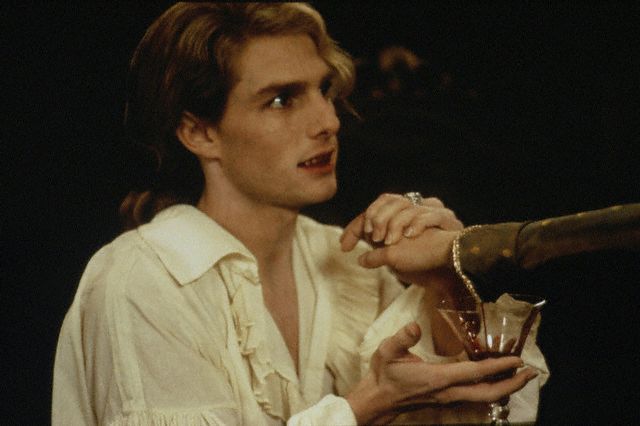
1) Lestat de Lioncourt from Interview with the Vampire


Lestat de Lioncourt is a vampire who can read minds. Although not strictly a villain as seen in later books, whiny Louis doesn't like that Lestat kills humans. Lestat is the best character in the film with wit and dark humor, not to mention his love of classical music. He makes Claudia take piano lessons even when she eats her teachers occasionally. When he returns from the near death, he accompanies his dramatic appearance with Joseph Haydn's Piano Sonata in Eb major.


2) Hannibal Lecter from Silence of the Lambs


Hannibal Lecter, although a cannibal killer, is nothing if not a man of class, sophistication, and distinction. One of his murders that landed him in jail was his reaction to a bad trombone player in the symphony. His unblinking, intense stare and enigmatic nature are what made The Silence of the Lambs so interesting, even though he didn't have a lot of screen time. His musical scene comes when he asks for an extra dinner, exploiting his privileges for helping Clarice Starling with her investigation. His musical selection is the Aria from the Goldberg Variations by Johann Sebastian Bach.The serene look on his bloodsplattered face while he loses himself in the music is an amazing end to the scene, but also very chilling.


3) Annie Wilkes from Misery


At first, Annie Wilkes seems like a sweet, maternal, lonely nurse who loves romance novels. She was nice enough to nurse Paul Sheldon, her favorite author, back to health in her home because it's too dangerous to take him to the hospital. She shows her true colors after she discovers he killed her favorite romance character, Misery, forcing Paul to write a new novel bringing her back to life. Her favorite artist is Liberace and she plays his versions of classical works throughout the film. The following scene, backed by Liberace playing Ludwig van Beethoven's Moonlight Sonata is one of the most iconic and frightening scenes.


4) Ernessa from The Moth Diaries


Ernessa is a cultured, British girl new the all girl's boarding school that Rebecca attends. Rebecca grows more and more jealous and suspicious of Ernessa due to her friend stealing ways and odd habits, like pacing outside at night. The real question is whether Ernessa is a vampire or not arises after Rebecca's best friend Lucie gets more and more sick after spending time with her. One clue towards this suspicion is her ability to play pieces by Frederic Chopin flawlessly and memorized. The specific piece is Nocturne op. 9 no. 1 in Bb minor. The Chopin-esque score also gives a great mood to this atmospheric, feminine film.


Did I miss your favorite classical music-loving villain? Please share below!

Sunday, October 7, 2012

Classical Music in Horror Movies

A lot of films use classical music in their soundtracks, but horror films tend to use it in a unique way. Most of the time, the beautiful music is creating contrast to the horrible images on the screen. Other times, the classical music serves to unnerve the audience and enhance the disturbing scenes. Here are some films that use classical music in awesome ways.

1) Battle Royale

This film uses Verdi's dramatic Dies Irae for the intro of the film where the Battle Royale program (where one class out of all of Japan is chosen to fight to the death on an island) is being introduced and the winner from the previous year is seen, covered in blood and smiling eerily.


It also uses a Schubert Lied (or art song) call Auf dem Wasser Zu Singen. This beautiful song backs the tragic story of Chigusa Takako, a runner who finds out the boy she likes also likes her back just as she is dying.


2) Ravenous

This film is about cannibals in California during the Mexican-American war. The song Hail Columbia, which was considered the US unofficial national anthem before 1931, accompanies a scene that should be fairly normal: a group of soldiers eating a celebratory steak dinner. However, the eating and the meat look so grotesque and disgusting, it's stomach churning. Hail Columbia in the background is at first played normally, but as the scene gets more disturbing, the balance falls apart and it's played just as grotesque as the scene. (I unfortunately couldn't find the clip and the music sounds fairly normal on the actual soundtrack, but watch the film to hear it!)


3) Oldboy


Oldboy is a complex revenge film. The Allegro non molto movement of Winter from Vivaldi's Four Seasons is used to accompany a fight scene and the following torture scene (not for the faint of heart). The intensity and speed of the music enhances the feeling of the scene, but I wouldn't think such a beautiful piece would go with such a gruesome scene.

4) The Exorcist


The Exorcist is an interesting and disturbing film of a young woman possessed by demons (or just becoming a woman if you read it the way I do). An equally disturbing piece of music is used to enhance the feel of the movie: George Crumb's Night of the Electric Insects from the Black Angel's string quartet. It sends chills down my spine with no visuals at all.

Monday, October 31, 2011

Happy Halloween!

Here are some super belated Halloweeny videos for your enjoyment. :)


* The Yeah Yeah Yeah's Heads Will Roll


This is a great video and an awesome song. It's obviously an homage to Michael Jackson and Thriller while having a slightly different tone and making their own unique song and video. The tone is darkly comic and the video has an gruesome, sparkly ending. I love the confetti slaughter scene. The song is catchy to the point of being infectious. Karen O has a gorgeous voice and really holds her own beside the acrobatic, Michael Jackson-esque werewolf.


* Science Fiction/ Double Feature from The Rocky Horror Picture Show, sung by Amanda Palmer


Amanda Palmer singing Science Fiction/ Double Feature with Moby, Stephin Merritt, and Neil Gaiman. This was right before I saw her in concert with Neil Gaiman on Halloween, which I will post about when I am not swimming through school papers. Anyway, Gaiman is very stoic on the toy piano and Palmer is just as charismatic and effervescent as ever. Plus they are a super cute couple. ;)


* Schubert's Der Erlkönig (The Erlking)


Franz Schubert set Johann Wolfgang von Göethe's poem to music in this Lied, or artsong, for solo voice and piano. The story is based on a Danish legend of a deadly and seductive fairy that preys on children. The poem starts with a father clutching his son and frantically riding by horse back to his farm. The boy is sick and in his feverish delusion, he sees the Erlking trying to entice him with riches and his daughters. These entreaties start nicely until he is frustrated and willing to take him by force. The father only sees wisps of fog or shuddering leaves and tries to calm the boy. The boy's terror reaches its peak and the boy shreiks. When they get home, the boy has tragically died in his father's arms. Here are the original German and the English translation of the text.

The music follows and enhances the story in interesting ways. The horse can be heard in the constant, frantic piano bass part. The characters all have their own ranges and tones although the Lied is to be sung by only one person. The boy's entreaties to his father are always high and frightened and get progressively higher as the song progresses. His father's part is low and reasoning. The Erlking's part starts high and soft when he tries to ply the boy with things, but turns lower and more hostile. I love this song and had the wonderful opportunity to analyse it in a music theory class. Even the keys and modulations have significance to the plot.

This animated short by Ben Zelkowicz is a wonderful adaptation of the tale in which sand and glass are used in a very innovative way to illustrate the song.


Any Halloween songs you guys like? Please share!

Tuesday, August 23, 2011

If I Stay Playlist

Since music is such a huge part of If I Stay, how could I not write up a playlist?

1) Cello Sonata No. 3, 1st movement by Beethoven


This piece plays during the devastating car crash at the beginning of the book. It's a heartbreaking scene when the speakers still work in the mangle car and she still hears the music while seeing her parents' bodies. It's a beautiful piece and this video features two great musicians, Glenn Gould and Leonard Rose.

2) Mozart's Requiem


After an uncharacteristic funeral for a friend, Mia's mother rants about how he would have hated it. Mia says she would want Mozart's Requiem played at her funeral. It's a powerful piece that is even more tragic because the composer did not live to see its completion. The beginning of the recording is the "Dies Irae" or Day of Wrath, describing the day of judgment, and my favorite part of the Requiem mass.

3) Cello Suite No. 1, Prelude by J.S. Bach


I had to include this piece because it's the first thing that comes to mind when I think of the cello.


4) Transylvanian Concubine by Rasputina


Mia seems to think that cellos have no place in rock music. I kind of wish I could have reached into the book and given her a Rasputina CD, a band that features cellos and does indeed rock. This is their most mainstream song that I first heard on an episode of Buffy the Vampire Slayer.

5) Escape Artist by Zoe Keating


Zoe Keating is an incredibly talented cellist that used to play in Rasputina, but now releases very successful self published avant-garde classical music. This piece, and the album it's from called Into the Trees, fuses classical music and technology in a mindblowing way. She uses a foot pedal to record a line she plays and then layers on top of it in real time. The results are amazing. I saw her play a different piece live at an Amanda Palmer show and she made a mistake, but it was still magnificent performance that I will never forget. She also collaborates with Amanda Palmer on her first solo album. It shows that a cellist can create classical music and rock music and be good at both.

Any more songs/pieces to add? Any awesome music you just want to share?

Monday, December 27, 2010

Black Swan

Nina Sayers is an intense ballet dancer intent on attaining perfection. She practices hours a day and doesn't have much of a life outside of her dancing. She lives at home with her overbearing, controlling mother, who is a former ballet dancer, and doesn't have many friends. Her dream is to dance the role of the Swan Queen in the ballet Swan Lake. However, the director of her company thinks she doesn't have what it takes to be both the delicate, fragile White Swan and the seductive, evil Black Swan. She is the embodiment of the White Swan and is technically a very good dancer, but she lacks the passion and ability to let go of her carefully constructed control. The director sees a glimpse of the Black Swan within her, so he casts her in the role. However, he alternates between berating her for her shortcomings and abusing her sexually. In addition, Lily, a new dancer, seems to be perfect for the Black Swan part and seems to be constantly trying to beat Nina in any way possible. Despite their rivalry, Nina is drawn to Lily in an inexplicable way. All of this combined with Nina's quest to get in touch with her dark side are wearing on Nina. She starts to hallucinate and has difficulty discerning fantasy from reality. Can she achieve the level of performance she wants for the lead role while still retaining her sanity or will this role destroy her?

I was afraid I wasn't going to get to see this film in the theater because it wasn't playing in any mainstream theaters and it was slowly leaving the indie ones around LA. It was deservedly nominated for 4 Golden Globes and is now showing at just about every theater. I went to see it with my family on Christmas day because nothing says holiday quite like a psychosexual thriller. My entire family and I were blown away by it. I think the film's success is owed to the characters, the direction, and the music.

The characters in the film are utterly believable and drive the film forward. Natalie Portman bears the bulk of the film on her shoulders, since she's the main character, and does a beautiful job of portraying a ballet dancer in her descent into madness. Nina at the beginning of the film is a little girl living in a grown woman's body. Her mother treats her like a child and she lives in a room fit for a young girl, filled with stuffed animals and pink butterfly wallpaper. She seems to be stunted emotionally with no other friends or family. Her only love and her only life is dancing. This is called into question when the director insists that she is too virginal and innocent to play the lead in Swan Lake. Her fragility and neuroses are uncomfortable to watch. As she tries desperately to impress the director and tries to attain perfection, she starts to mentally break down, but breaks through the childish facade she had been living in. She has to give in to emotion instead of the well practiced control she has. I know from experience that a performer that is technically good, but has no passion or emotion in the performance, is pretty dull to watch or listen to. The destruction of her whole self is needed for her to attain perfection as a dancer in her mind. As she descends into madness, the film gets more and more violent and unpredictable. When she finally dances the coveted role of the Swan Queen in front of an audience, it's absolutely beautiful to watch. The events that go on behind the scenes, real or imagined, give her the perfect state of mind in which to dance either the White or Black Swan roles. Her Black Swan was the opposite of everything that Nina was throughout the rest of the film: predatory, seductive, and almost snakelike. She was almost unrecognizable. At the end of the film, it's almost impossible to tell which events actually happened and which are the product of Nina's fractured mind.

The other characters just add to the film. Vincent Cassel as the director is a kind of hybrid mentor and villain. He pushes her to become a better and greater dancer while using his position of power to abuse her. He simultaneously pushes her forward and breaks her down. I really loved to hate his character. Mila Kunis played Lily, the physical manifestation of the Black Swan. She is the opposite of Lily in almost every way. She is uncontrolled and relies on emotion rather than control in her dancing. The rivalry and friendship between her and Nina is compelling to watch. Barbara Hershey as Nina's mother is extremely creepy and takes the stage mother to a new level. The cast as an ensemble worked brilliantly together.


Darren Aronofsky is a great director. I loved both Requiem for a Dream and The Fountain before Black Swan. In this film, he creates a small world inhabited by dancers that seems separate from the rest of the world. The atmosphere is tense and it seems as if someone could lose a part the minute they do or say the wrong thing. There are many things that aren't talked about in the open, but gossiped about quietly amongst the dancers. I loved the use of the handheld cameras and closeups. It gave the film an intimate, claustrophobic feeling as well as enhanced the off-kilter route of Nina's mind. The only part of the film that felt open and spacious was on the stage.

I have enjoyed many of Clint Mansell's film scores, including The Fountain, Requiem for a Dream, and Moon, but I think I enjoy Black Swan the most. It features, of course, Tchaikovsky's Swan Lake ballet music and Clint Mansell's unique ambient music with it. His music is largely repetitive and different from usual film scores, opting to use a more modern as opposed to classical approach. I thought the placement of the source music was perfect, as were his additions. The score is really what helped build up the tension in the film for me. I have been listening to the score pretty much nonstop since I saw the film. Here is one of my favorite tracks, Perfection, which is the music that Nina dances to as the Black Swan.


I really enjoyed this film. I like its feminist undertones, mainly that it deals with issues that plague primarily women, such as eating disorders, infantilization, objectification, self mutilation, etc. I think, to some extent, the film is about any woman's drive to be the ideal woman that is, for most women, unattainable without surgery. It's a unique, dark, and disturbing film. I would highly recommend this to everyone.

My rating: 10/10 fishmuffins

Tuesday, October 19, 2010

Halloween Music: Soundtrack Edition

I've decided to highlight some great Halloween music in soundtracks, whether it be for film or the theatre.

Film:

1) The original Halloween film has one of the greatest film soundtracks ever. The themes are so simple and minimalist, but they really create almost all of the tension and suspense in the film. John Carpenter, the director, composed and played almost all the music on the score. This particular theme is very recognizable and engaging despite its repetitive nature.


2) Ravenous is a great film about cannibals during the Mexican-American War. It exhibits a twisted sense of humor that is also conveyed through the music, composed by Damon Albern and Michael Nyman. This certain track is placed at the end credits and combines two themes in the film: Boyd's Journey and Cannibal Fantasy. The twangy, uneven pulsing banjo gives the piece an uncomfortable feeling and remains throughout the first theme as more and more melodies and countermelodies are added on top of it. Cannibal Fantasy is actually a very beautiful theme, but when heard during the film is accompanied by the main character Boyd's impromptu visual fantasy of eating another person.


Theatre:

1) I love the musical Jekyll and Hyde, but I've never seen it. This song was my first introduction to it and I was amazed by the singer's uncanny ability to sound like two separate people. I ended up finding out that the singer is Anthony Warlow and I specifically bought the concept album he sang on because I was so moved by his singing. I heard others sing it, but it didn't capture the internal struggle and anguish to me like this talented singer. This song is the final battle between Jekyll and Hyde.


2) Sweeney Todd is a great musical, but I never got into any of the stage productions. They just seemed way to unnecessarily operatic for my taste (and I love opera!). Anyway, when the film came out, I was a little wary, but I think Johnny Depp did a great job giving the character a little bit of an edge. I actually liked that most of the characters weren't perfect because it seemed more organic to me. This scene is where Mrs. Lovett gives Sweeney Todd his knives after he had been wrongfully locked up in jail for years. He seeks revenge on the corrupt judge who put him there. The music is so lyrical; it's almost a love song from Todd to his knives. The cinematography is excellent, giving a variety of shots during the song instead of just shooting the singer from one angle like some films do. The use of the knives to reflect their faces just looks awesome.

Friday, October 16, 2009

Classical Music for Halloween Part 2


My second classical piece to focus on is: Danse Macabre by Camille Saint-Saens!

The Dance of Death (or Danse Macabre in French) is a sort of celebration that originated in late Medieval era. It was an allegory in which they recognized the unity of all mankind through death. No matter what a person's station, social status, or wealth, everyone ends up in the same place. According to Wikipedia,"La Danse Macabre consists of the personified death leading a row of dancing figures from all walks of life to the grave, typically an emperor, king, youngster, and beautiful girl- all skeletal. They were produced to remind people of how fragile their lives and how vain the glories of earthly life were. Its origins are postulated from illustrated sermon texts; the earliest artistic examples are in a cemetery in Paris from 1424."

My favorite setting of this concept is that of Saint-Saens' tone poem for orchestra. The harp opens the piece playing 12 subsequent D's to signify a clock striking midnight. The opening violin solo acts as Death, calling forth the dead to dance for the night, until he lays them to rest until next year. The E string of the violin is actually tuned down to E flat to play the tritone chord, which was also known as the Devil's chord. The xylophone is used to call to mind the rattling of bones. The piece is just really fun! I could totally imagine this piece in The Graveyard Book during the Danse Macabre celebration in chapter 5, where the dead dance with the living. Please listen to the piece below and enjoy!


Wednesday, October 14, 2009

Classical Music for Halloween!!!!


I'm a music major at Cal State Long Beach and I want to share my love of classical Halloween music! My absolute favorite orchestral piece of all time is Hector Berlioz's Symphonie Fantastique. It's an awesome piece with 5 movements that tells an amazing story using absolutely no words.

This is the basic story: Boy meets girl. He falls in love with her in the first movement (Passions). He sees her at a party and is pretty much obsessed in the second movement (A Ball). In the third movement (Scene in the fields), he reflects upon his loneliness in the countryside and eventually begins to doubt that his love would be faithful. The fourth movement (March to the Scaffold) gets really weird: our young hero poisons himself with opium and he dreams that he has killed his love and was beheaded for it. The fifth movement (The Witch's Sabbath) takes place at his funeral, where witches and sorcerers converge and rejoice. His love also makes an appearance, but is changed. She mocks him and dances with the witches.

The most impressive part of this work is the development of the fixed idea, which is the young lady's them, that recurs in each movement, tying the work together. This was an early version of Wagner's leitmotif. Each time the theme returns, it's colored by the way the young man feels.

I love this piece so much. The fourth and fifth movements are of course my favorites. I love that you can hear so much of the plot through the music, like the French people's joy at the beheading, the witches mocking the young man and dancing in circles, and the young man's infatuation. If you haven't heard this piece before, I would highly recommend that you give it a try.

By Velvet's request, I have embedded the entire symphony below.

Passions

A Ball

Scene in the Fields
Part 1

Part2

The March to the Scaffold

The Witch's Sabbath