* Saw VI
Hoffman is back (boo), but this time he is exacting revenge on a scummy health insurance executive who created a formula that values healthy people who will earn them more money over sick people who actually need treatment. This is another installment that isn't bad. In a pre-Affordable Healthcare Act age, people were frequently turned away from health insurance, frequently when they actually needed it, for small discrepancies in applications or pre-existing conditions. Jigsaw was one of these people who was denied a promising experimental treatment due to his age and the cost. He designed a series of traps that has this executive literally deciding who lives or dies. The victims are people he knows, coworkers, peons, and finally, his own family. For anyone who was the victim of health insurance's predatory and cutthroat practices, this is cathartic. Jigsaw's situation is relatable and we finally get to see the person beneath all the traps and the facade. It's gratifying for someone in control of this to see how toxic and perverse their practices are when more honest about the outcomes.
In addition to this pretty cool storyline, another follows Hoffman and Jigsaw's ex-wife in a weird power struggle. Both want to honor Jigsaw, but both want to do it differently. Both characters are awful. The wife is weak and indecisive while Hoffman is annoying and overbearing. I want both to die just so I won't have to see them in the next film. The ending is preposterous. If that reverse bear trap had been the real thing, nobody would have survived it. A cheap one was used simply to continue this tiresome storyline until the final chapter. Overall, I love the main story and I think others would too. For the time, it tapped into a typical experience in the US and provided a gruesome, but satisfying response. The rest could have been cut from the film.
My rating: 3/5 fishmuffins
* Saw 3D: The Final Chapter
Hoffman is back again (double boo). He survived the reverse bear trap super conveniently and continues his reign of terror on two guys and their mutual lover, a skinhead gang, and Bobby Dagen, a self help author who claims to have survived one of Jigsaw's traps (which he didn't). Jigsaw's ex-wife is on the run from him after her failed murder attempt. This installment is also not horrible. The opening scene is horrible with the two timing woman and her unwitting lovers. Who cares about their drama? It also has nothing to do with the rest of the movie. After that, it gets better. I loved seeing Cary Elwes again as Dr. Lawrence Gordon from the first Saw film. He plays a small, but important role. Seeing liar and con artist Bobby Dagan go through actual traps, ending with an exact replica of the one he claimed to have survived. Seeing him with the other survivors was just gross since he capitalized off of their pain and suffering. In the meantime, Hoffman is trying to avoid the authorities and kill Jigsaw's ex. One truly disgusting scene featured a sexualized death scene with her in a dream clearly meant to exploit the 3D element. Really Saw filmmakers?? Ew. The ending is satisfying, twisty, and ties together the whole series nicely. Some parts are missteps, but overall, an enjoyable close to the series.
My rating: 3/5 fishmuffins
Monday, October 19, 2015
Sunday, October 18, 2015
Halloween Mini-reviews: Saw Edition
Full disclosure: I don't really like the Saw movies. The first one was genuinely scary and interesting right up until the end. Then when Wesley from The Princess Bride cuts off his foot, the filmmakers must have run out of money or something because suddenly the severed foot is off screen and the film ends abruptly. Since the first movie was almost perfect, I tried to watch Saw II and III, but they grew more and more disappointing. Cool kills and weird traps are no substitute for a good story line and actual suspense. The only standout scene of these two films is the needle pit in Saw II. I gave up on the series until I saw the whole series was being shown on IFC, so I recorded it. It wasn't as bad as I thought it would be.
* Saw IV
Jigsaw is dead and an unknown cohort continues his work, messing with the FBI agents working on the case. I really only remotely like this one because of Scott Patterson as Agent Strahm who also played Luke from Gilmore Girls. He's always an enjoyable actor to watch and he manages to alienate everyone in the film by being an ass, but he's looking for the truth. The autopsy at the beginning and the end (which takes place after the events in the film) is actually pretty cool and (to my knowledge) accurate. The ice block scene near the end and the trap with the battered woman and her abuser were also cool, but it just doesn't have much going on plot wise. There's an unexpected twist at the end and that's about it. Meh,
My rating: 2/5 fishmuffins
* Saw V
Detective Strahm wakes up with his head in a jigsaw trap and survives! He knows fellow FBI agent Hoffman is Jigsaw's real cohort. He can't yet prove it, so he plans to covertly gather evidence until he can prove it 100% to his coworkers. Meanwhile, 5 people with something in common are in another Jigsaw trap and have to work together in order to survive instead of backstab each other as is their tendency. I liked this installment a lot. Strahm is still awesome, just a little more hoarse because of his self inflicted tracheotomy to survive Hoffman's insurmountable trap. Since he's kind of an ass, everyone suspects him as being Jigsaw's protege, giving Hoffman the edge he needs to sneak around and plant evidence against him.
The side story is actually interesting, which surprised me, The 5 people all contributed in some way to an apartment being burned down with 8 people still inside. All of them acted in self interest and greed, so Jigsaw wants to teach them to do the opposite: be generous, share the load, and work together in order to make each task easier. Of course they don't do this, so the people remaining have a really hard time accomplishing the last task. This type of situation is when Saw is at it's best. Those traps that have no real solution are useless and uninteresting. When they have to get through the trap to change something fundamental about their lives is when the series shines. More of this please. I personally hate Hoffman because he's arrogant and doesn't continue Jigsaw's legacy, but distorts it into executing people he doesn't like. The ending was annoying, but this is the best installment since the first.
My rating: 3.5/5
Saturday, October 17, 2015
Crimson Peak
Bookish, practical Edith wants nothing to do with high society or frivolous things like dances. She aspires to be a fiction writer, but runs into trouble because the stereotypes about women writers. Enter Sir Thomas Sharpe, desperate for money to fund his new invention to kick start his business. Edith mocks him for his title before even meeting him, but is immediately entranced by him when she does. Her father doesn't approve of the match at all and even goes so far as to bribe Thomas to leave and break his daughter's heart. After the tragic, unsolved murder of her father, Edith seeks solace with Thomas and they are quickly married. They return to Allerdale Hall in England, Thomas and his sister Lucille's home that has fallen into extreme disrepair. Edith is obviously out of place there, but she starts to see apparitions and clues that seem to point to some deep, dark secret about her new husband, his sister, and their past.
Crimson Peak is a lush Gothic tale with a bit of a twist. The film has most of what you'd expect of a stereotypical Gothic tale: a young lady held prisoner, a decrepit house full of secrets, a mysterious young aristocrat, his clingy sister, and a ghost. Edith is a huge nerd, which makes her awesome and part of why I rooted for her the whole film. She's an introvert who prefers quiet activities like reading or working on her novel. Despite hating him before knowing him personally, Thomas Sharpe utterly charms her with his passion and creativity. They marry in a whirlwind of love and grief for her mysteriously murdered father. Once they get to Allerdale Hall, it's clear that something is awry. Although Edith makes some pretty hugely stupid decisions, I was on her side throughout the movie. Some horrible decisions include: stealing Lucille's keys right in front of her, taking incriminating evidence back to her room, not covering her tracks when snooping around, and not running screaming right when she got there. Her mother's ghost appears to her multiple times to deter her, but Edith doesn't understand the message until it's too late.
Allerdale Hall is a once beautiful mansion that is now derelict and fallen into extreme disrepair. When you think old mansion, you probably think of a cobwebby mess, but this one takes that further than I've ever seen with someone still living in it. The roof has a giant hole in it right above the entry way. Leaves or snow settle on the floor depending on the weather. The walls are covered in giant moths and the incredibly creepy clown figures Thomas carved are everywhere you look. On top of all this, the house also sits atop red clay mine and it sinks into the clay a little more each year. Red clay seeps into the walls as mud, into the pipes, and through the snow around the property. Everything looks bathed in blood. On the other hand, parts of the mansion are still luxurious and gorgeous. The architecture is simply mind blowing. The shapes tend to have arches with spikes lining them. Everything has hard edges, spikes, and very little natural light. The enormous house is made to feel claustrophobic, like the walls are closing in around you. The mansion is one of my favorite settings for any film because of it's odd mixture of luxury and squalor. The mansion's state and dual nature is symbolic for Thomas and Lucille, their relationship, and their mental well being along with their cache of secrets. Tom Hiddleston is utterly charming as Thomas, but it's amazing to see him show what I see as his real character when he purposefully humiliates Edith in front of everyone in order to secure money from her father. He shows his true motives and attitude towards her with venom. Jessica Chastain looks a bit odd as a brunette mostly because of the severe, old fashioned dress and hair styles, but she's perfectly clingy, intense, and manipulative as Lucille. She shows her true self and looks much more natural near the climax of the film in a slightly revealing nightdress and her hair down.
Crimson Peak is a film that's a feast for the eyes. The costumes are amazingly detailed and gorgeous. The ghosts are also expertly designed to be frightening and fascinating at the same time. They look like they have tendrils of smoke constantly rolling off of them. Their creation is a delightful amalgamation of practical effects, actors (Doug Jones of course), and CGI. Allerdale Hall is the perfect mix of luxury and dilapidation with a healthy dose of red everywhere from the clay. The music throughout is excellent as well. Piano music plays throughout because Lucille is an accomplished pianist. The score also has a dual nature. The main themes are lush and sweeping melodies with a full orchestra, but the eerie parts are accompanied by a tense theme with a repeated very high single piano note. I love how the themes flow to all parts of the narrative to make a complete artwork. I enjoyed it immensely and I urge you to catch it in the theaters before it's gone.
My rating: 9/10 fishmuffins
Friday, October 16, 2015
The Stars Never Rise
* spoilers *
Nina Kane is trying to survive, but it's difficult. Her mother is an oblivious drug addict bent on escaping reality, so money, food, and resources are scarce. Nina does everything she can to provide for herself and her little sister Mellie without letting anyone know anything is wrong. She only needs another few months until she's 18 years old and free from her toxic mother. On top of this, the world they live in is incredibly dangerous: demons have decimated their population, making souls scarce. The church rules with an iron fist, but keeps everyone safe from the demons. Nina finds out Mellie is keeping a secret that will destroy everything they tried to accomplish. She meets a rogue exorcist named Finn by chance while being attacked by a revenant who shouldn't even exist. They have to trust each other to get to the bottom of why demons are still around in New Temperance and how to save herself and her sister from the wrath of the clergy.
The world in The Stars Never Rise is different than any other I've seen. Demons have been consuming souls at an alarming rate and possessing people. Possessed people appear normal while demons care enough to pretend. Over time, they get more and more corrupt and deteriorated. The Church saved humanity with exorcisms and made the world safe again. In exchange for safety, the Church expects everyone to adhere to their strict regime which includes purity, faith, and obedience at all costs. Because souls are so restricted, bodily autonomy is a thing of the past. Only women deemed worthy can reproduce. All others are forcibly sterilized. Of those "worthy" women, only ones that can find a soul for their baby are allowed to get pregnant. These souls can be donated from family members or they can try their luck from the very small registry. Women who can't get a soul for their baby are condemned to carry to term, give birth, and watch their baby die with no soul. This world is extremely frightening to me because this puts into practice many religious group's paradise where women have no rights and their particular religion is mandated practice in school, work, and life only with some supernatural elements.
One of the main problems I have with the novel is the conflicting rhetoric. The Church is staunchly against abortion as expected, but abortion is still looked at by the characters as immoral and not an option. I suppose it could be argued that their indoctrination is lifelong and hard to break through, but it annoyed me that these characters recognize that practically everything else about the church is crazy and oppressive bullshit except for this. They affirm this pretty significant church belief. Of course the pregnant teenager in the book wants to keep her baby despite there being no soul available for it (so she would have to simply watch it die) and no resources for her to raise it let alone to take care of just herself. This could have been the perfect opportunity to include a teenage girl who wants an abortion to really push against the religious right wing rhetoric that constantly works to chip away at abortion rights, but Vincent chose to go the opposite way. Everything else in the novel from freedom to sexuality to bodily autonomy is in line with liberal beliefs except this one.
Other than this grievance, I greatly enjoyed The Stars Never Rise. The characters are interesting, particularly Finn who has no body of his own. The romance with a boy who is basically just a spirit and Nina was unique and intriguing. I'm wondering what his backstory is and if he is exactly what he thinks he is. I love Rachel Vincent's writing and her ability to create varied and layered characters. Nina in particular was fun to read with her no nonsense approach, good heart, willingness to self-sacrifice, and her big heart. I also liked that even before all this started happening she didn't believe everything she was fed by the church. I am interested in reading the next installment.
My rating: 3/5 fishmuffins
Thursday, October 15, 2015
Creepshow
* spoilers *
This film anthology features 5 short stories with a frame story to tie everything together. Overall, the films are a bit cheesy, but bring the feeling of old horror comic books like Tales from the Crypt that act as gory morality plays. I liked how the bright red light highlighted the moments of horror in each segment.
The prologue/epilogue segment shows a kid that was reading the stories abused and mocked by his father. It nicely ties together the stories, provides a little more of that gruesome justice associated with these comics. Father's Day features decadent descendants enjoying their murdered father's money. It drags on a bit at the beginning and has a chilling ending. While these are usually morality plays, this one is a little more complex than usual. The long suffering daughter Bedelia snaps one day and kills her father, but only after he amassed his fortune in very illegal and immoral ways, emotionally abused her for years as she took care of him, and orchestrated the murder of her boyfriend. She killed him in a fit of rage and decades of bottled up emotions while he did tons more for no justified reason. I'm completely of on the descendant's side, so I didn't agree with the ending at all even though it was pretty awesome.
The Lonesome Death of Jordy Verill has a backwoods yokel finding a meteor and being infected by some sort of plant disease. This one is a bit depressing and pretty badly acted by Stephen King. Jordy doesn't want to go to the doctor out of fear, so he just waits until he's entirely overtaken by the plant and commits suicide. The beginning is so goofy and over the top with his cheesy imaginings that the end contrasts nicely as serious and dark. There's no humor in his death and it's a shame that a doctor might have been able to help him. A lot of people do wait to long or never go to the doctor in this society where they either have no money or fear what really might be wrong with them.
Something to Tide You Over is a super punny title that features a delightfully sinister Leslie Nielsen as a psychopath murdering his unfaithful wife and her lover. I can't take the man seriously after all of the Naked Gun and other parody films he's done, but it's a nice change of pace. The technology is pretty laughable. How can there be a full TV and VCR set out on the beach? The actual method of the murder was torturous and cruel as the victims are buried up to their neck in sand and left to drown as the tide comes in. The ending is satisfying and a little gruesome, in the same vein as the first segment with less moral complexity.
The Crate is kind of a weird one. A man loathes his wife and daily dreams of murdering her. He finds the perfect way to dispose of her and goes through with his plan. Why not just divorce? It just seems like a lot of trouble when an alternative, legal, simple solution is available. This ending is open ended and who knows what could happen. It also kind of goes against the formula that the evil are punished in the end as the husband seems to get away with the crime. It's way more evil to me to murder your wife via a trapped creature in a crate than to humiliate and abuse your husband daily. It obviously isn't moral to do that either, but murder isn't exactly a proper punishment. The open end may be implying that the creature will eventually come for him, but it wasn't very clear. The segment was going so well and then the creature is shown fully, up close. The best thing with creatures like this is to show it as little as possible because the mind will picture way worse than they could ever create.
They're Creeping Up on You is my favorite segment. An insufferable man who treats no one in his life with respect is obsessed with being clean. His apartment becomes infested with copious amounts of cockroaches and it tortures him to no end. He spends hours trying to call someone to get rid of them, but continually abuses even those who are supposed to help him. The apartment looks nauseating by the end when it was pristinely white in the beginning. The ending has one of the most horrific images I have ever seen and one of the best instances of practical effects. Overall, I think the hype for Creepshow is a little overblown, but the segments are mostly enjoyable. They bring nostalgia, a dose of horror, and a heaping helping of morality.
My rating: 4/5 fishmuffins
Wednesday, October 14, 2015
Halloween Mini-Reviews: Kill Theory and Goosebumps
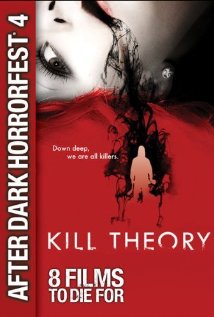
9) Kill Theory
A bunch of stupid college students vacation in a remote house and are forced to kill each other so some weirdo can prove a point. I thought this was Kill List, which a lot of horror fans seem to think is a great film. This is not a good film and features absolutely insufferable young people running around, killing each other. I liked seeing Daniel Franzese from Mean Girls and Taryn Manning from Orange is the New Black in different roles. The concept was actually pretty interesting, but an important aspect of a film like this is actually caring about what happens to the characters. I simply didn't. Manning died super early although I liked her; Franzese was too hysterical to really root for; and the others were awful. I wanted them to die horrible deaths. The ending made me think really?? All of this just to prove you right? It's super random and frankly doesn't make a good movie premise.
My rating: 2/5 fishmuffins
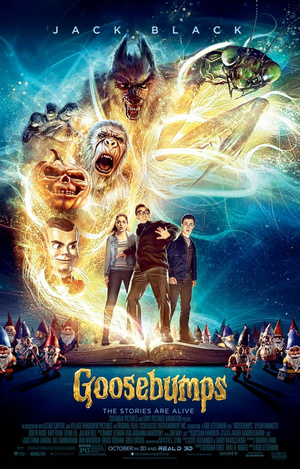
10) Goosebumps
A couple of kids unleash R.L. Stine's literary monsters, fight them, and try to get rid of them. This movie was total nostalgia for me. I read all of R.L. Stine's books as a kid and it's part of what got me into horror. Seeing them all together on the screen was delightful and fun. It reminded me a little of the Monster Squad with kids fighting monsters except with less perviness, guns, and cussing. The biggest strength of the film is the characterizations. All of the teens could have been insufferable and annoying, but they were actually pretty cool. I sympathized with Zach for his struggling-to-make-it-work mom, his grief over the loss of his father, and his life being completely uprooted to live in a small town. I also sympathized with Hannah because her dad is alienating and weird, keeping her away from pretty much all living people. I rooted for Zach and Hannah's romance and their relationship was really sweet. Their meet cutes between their homes and date at the abandoned amusement park were adorable, Even Camp, the neurotic sorta best friend, is endearing. Jack Black is the most cartoony caricature I have ever seen, but it works with the film. He's silly, wannabe sinister, and super dramatic throughout with a bizarre affected accent. The end is satisfying and ties everything up nicely. The only flaw is the CGI used for the monsters. I think it looks a little too cartoony, but it is a kids' film. I would appreciate more realism and scariness, but the intended audience is a concern. It's a cute film that's simple and enjoyable to watch.
My rating: 3/5 fishmuffins
Tuesday, October 13, 2015
A Girl Walks Home Alone at Night
* spoilers *
A mysterious girl walks the streets at night, punishing the wicked and protecting the good in the Iranian town Bad City, a cesspool of pimps, thieves, prostitutes, and other criminals. Arash is trapped in the city living with his heroin addicted father. He deals drugs, but he does it to survive and his ambitions lie elsewhere. Instead of following his dreams, he's stuck in Bad City cleaning up his father's messes and paying back his debts. Arash and the girl's paths eventually cross and a kind of romance blossoms. While this is happening, bodies are found with increasing frequency.
I've heard nothing but good things about this film, so I was eager to watch it. The cinematography is beautiful and artistic. The film is entirely in black and white, which makes the use of light and shadows all the more effective. I could have watched it happily on mute. The story moves agonizingly slow at times, but it was like slowly opening a gift that reveals just a little bit of itself as you tear more and more wrapping. There is no real explanation of the story. Where are the police? Who is this girl? Why is she there and what are her motives?
Sheila Vand kills it as the girl. The chador she wears outside only reveals her face, leaving the rest of her a mystery. The loose, flowing garment is like a superhero cape, but also like Dracula's cape, which brings to mind classic vampires from the Bela Lugosi era of film. This film takes those classic vampire expectations with her outerwear and then reveals it to be false when we get to know her more. Underneath, she could be anyone. She wears comfortable clothing, usually a striped shirt, pants, and comfy sneakers. She loves riding her skateboard and listening to music alone in her apartment when she isn't exacting revenge or dissuading wannabe criminals or evildoers.
Despite her outwardly youthful appearance, there's no questioning the girl's age and experience. She carefully observes everything and keeps herself hidden as with her dress. Throughout most of the film, she waits for others to talk and rarely initiates conversation on her own. This may be seen as a weakness, but she allows people to reveal themselves to her while she stays a blank slate to them. Oftentimes, they project their own preconceived notions onto her. She's looking for some human connection because eternity is lonely. Based on the events in the film and the giant pile of jewelry and other valuable items, she mostly runs into miscreants of various types. Then it all changes when she meets a slurry Arash and they have an instant connection. Their romance is sweet and a little awkward. It's clear that the girl doesn't need Arash to survive. She can take care of herself. However, companionship makes life more enjoyable and more bearable.
I love the role reversal that the girl poses. The title indicates something dangerous. A girl walking home alone at night is vulnerable to attack and this situation is pretty much the staple situation of any horror film. The danger is shifted in this film from the vulnerable girl to the stereotypical perpetrator of these attacks. This girl uses tactics that male harassers would make towards women, like standing and staring at them, following their every movement, or chasing them down. This role reversal either makes the targets uncomfortable or causes them to dismiss her because of her gender until it's too late. The girl is usually very stoic and quiet, but she's quick to turn efficiently violent when the opportunity arises.
A Girl Walks Home Alone at Night is a unique film in black and white and entirely in Farsi. The film is clearly influenced by spaghetti westerns, graphic novels. and classic horror films. It moves slowly, thoughtfully, and deliberately. If nothing else, try it because it's something new and different. It has shades of a lot of things like Let the Right One In plus all its influences, but manages to be wholly itself.
My rating: 4/5 fishmuffins
Subscribe to:
Posts (Atom)